SEnt on February 20, 2026
I currently use three different tools for photogrammetry, each serving a distinct purpose:
PhotoModeler: establishing speed/position from stationary surveillance, modeling crush from witness/appraisal photos, mapping scene evidence from police/witness photos
PFTrack: establishing speed/position from moving cameras
RealityScan (by Epic): creating 3D models of an object or environment from a large photoset, including those captured via drones… or even GoPros.
Of the three, RealityScan is the only one I’m tempted to replace. It’s powerful and the price is reasonable (especially if your annual revenue is below $1M, where it’s free), but it’s not the most user-friendly software. Inspired by last week’s email and prior conversations with Eugene Liscio, I decided to give 3DF Zephyr a fresh look.
Similar to Pix4D, RealityScan, and Agisoft, 3DF Zephyr is a photogrammetry tool that uses Structure from Motion (SfM) to build detailed 3D models from large photo sets. Here’s a model I created with photos of a Honda taken a few years back. You can download the photoset here if you want to experiment.
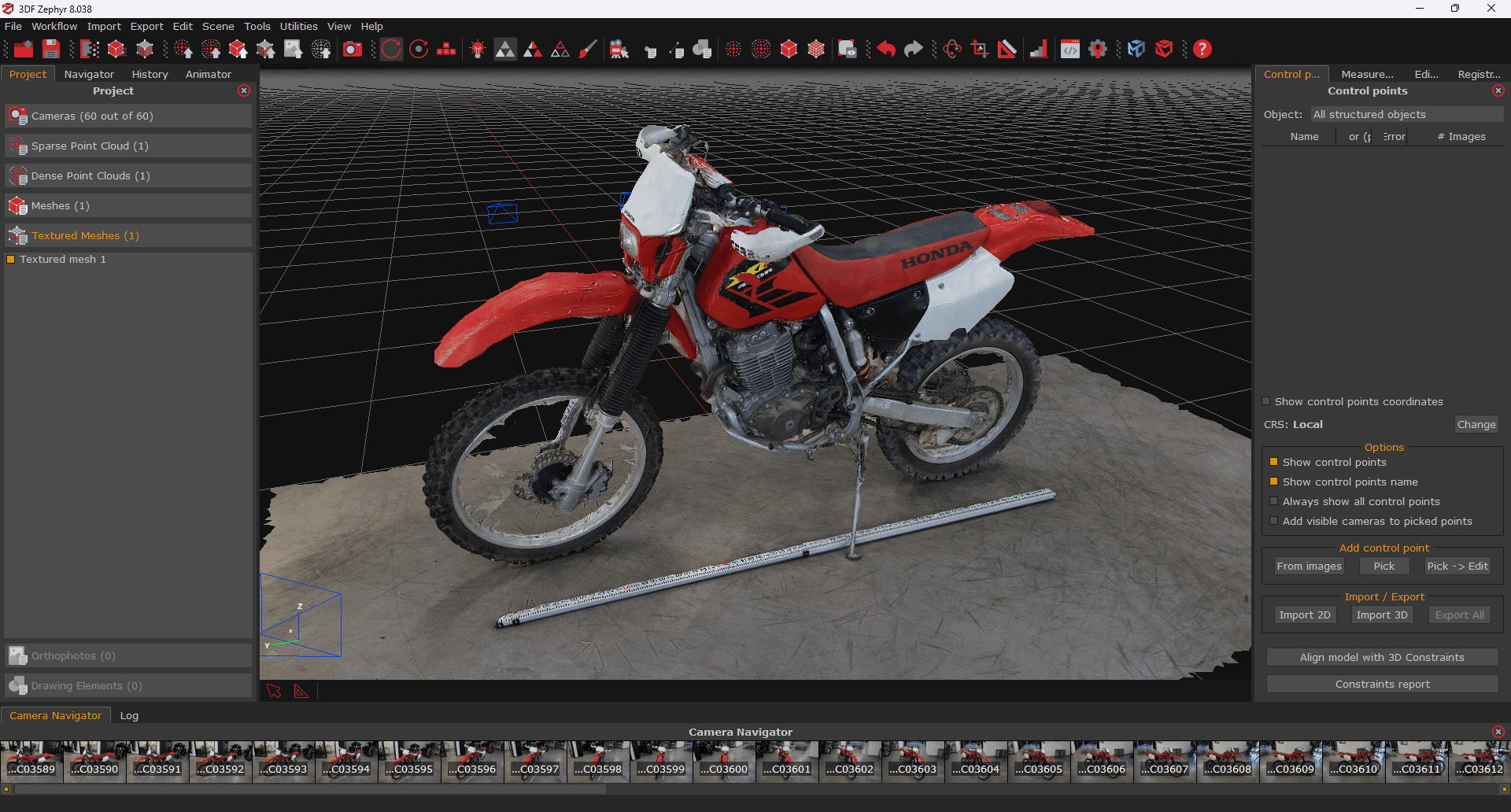
The results closely match what RealityScan produces, but Zephyr’s process is more straightforward and the result was easier to edit and export.
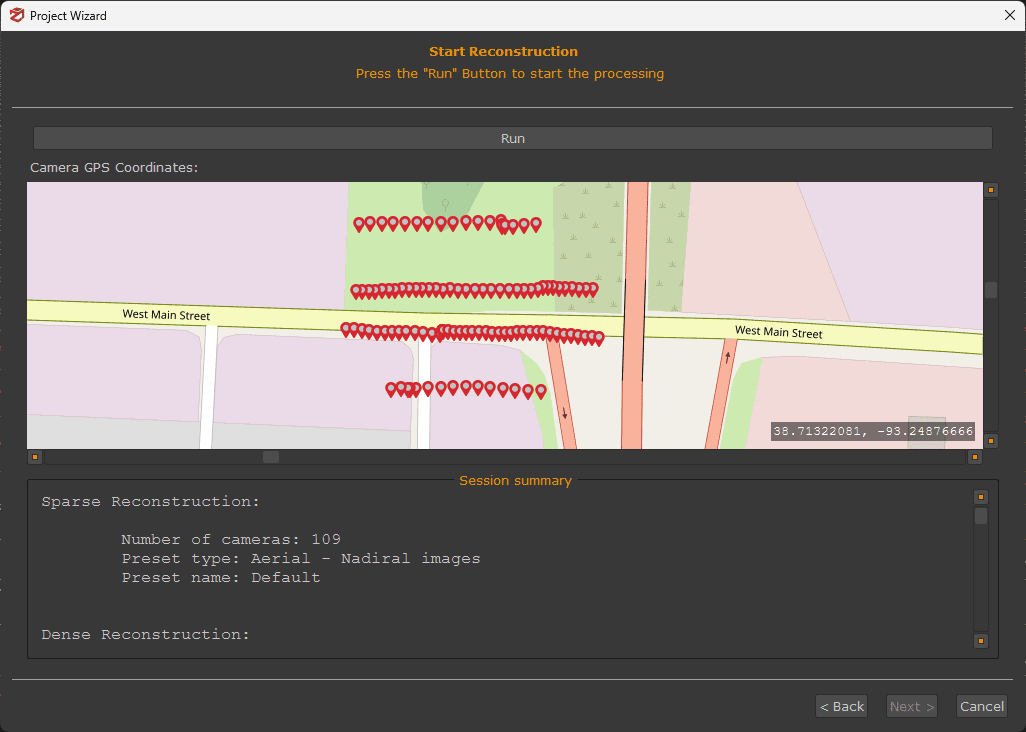
I also brought in a subset of photos (109) from a semi-recent drone flight to get a feel for that process. As with the Honda, it was straightforward and well guided. There are drone presets, the GPS coordinates of each image were immediately identified, and the processing was quick (23 minutes to an ortho... granted the photos were processed on a beastly computer).
Pricing: A perpetual license that can handle unlimited photos cost ~$234 (converting from Euros), but advanced features like orthos, scan data integration, or integration of control points requires the $4,950 version (or a $3,000/year subscription).
Bottom line, Zephyr is a steal if you just want to create 3D models from photos. Stepping up to drone imagery processing isn’t cheap, but you get a well-designed, user-friendly, powerful program with solid support… and that’s worth a lot. If you're on the hunt, it's worth giving their free trial a go.
Thanks for reading, keep learning!
Lou Peck
Lightpoint | JS Forensics
P.S. If you'd like to learn more about all these photogrammetry tools and methods, we just launched a May course! Attendance will be capped at 20. Details can be found here.