sent on january 23, 2026
I had a conversation this week with a seasoned, well-read recon who was analyzing a trailer underride incident. I asked if he had tried Rene Castaneda et al.’s volumetric crush method. He wasn’t familiar with the paper, which suggests it still flies under the radar for many recons. So, here are the essentials!
Rene, along with a deep and talented team, conducted 18 instrumented crash tests using low- and high-profile vehicles. Speeds ranged from 15 to 39 mph, and all but two vehicles came to a complete stop due to the impact. The two slippery vehicles (both low-profile vehicles at 35+ mph) exited the far side of the trailer at ~21 mph.
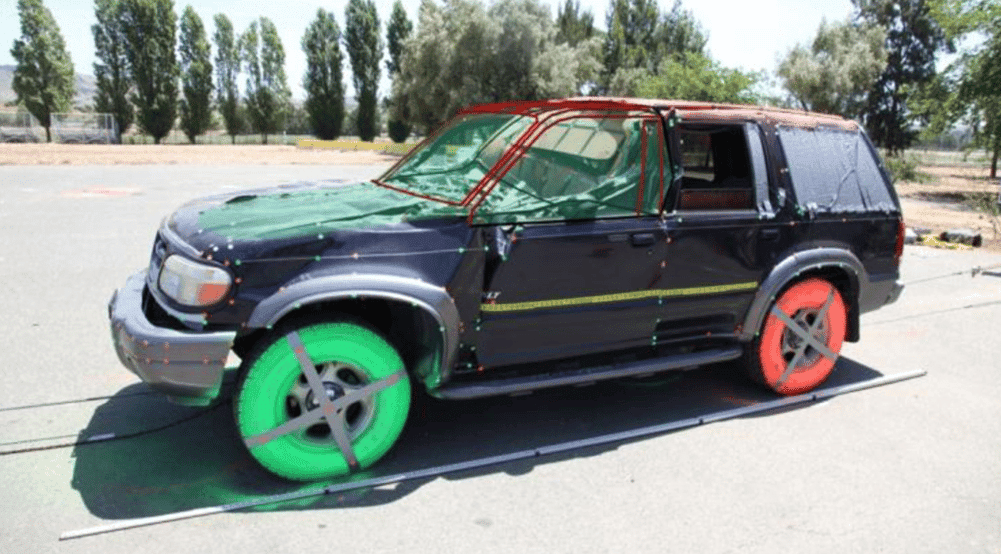
SAE 2012-01-0614 Figure 8, showing underride damage to a 2000 Explorer along with an outline of the original geometry.
This study was published in 2012, a few years before laser scanners became popular. So, the team utilized total stations and photogrammetry to quantify the volumetric crush sustained by the vehicles and compared that to the change in kinetic energy.
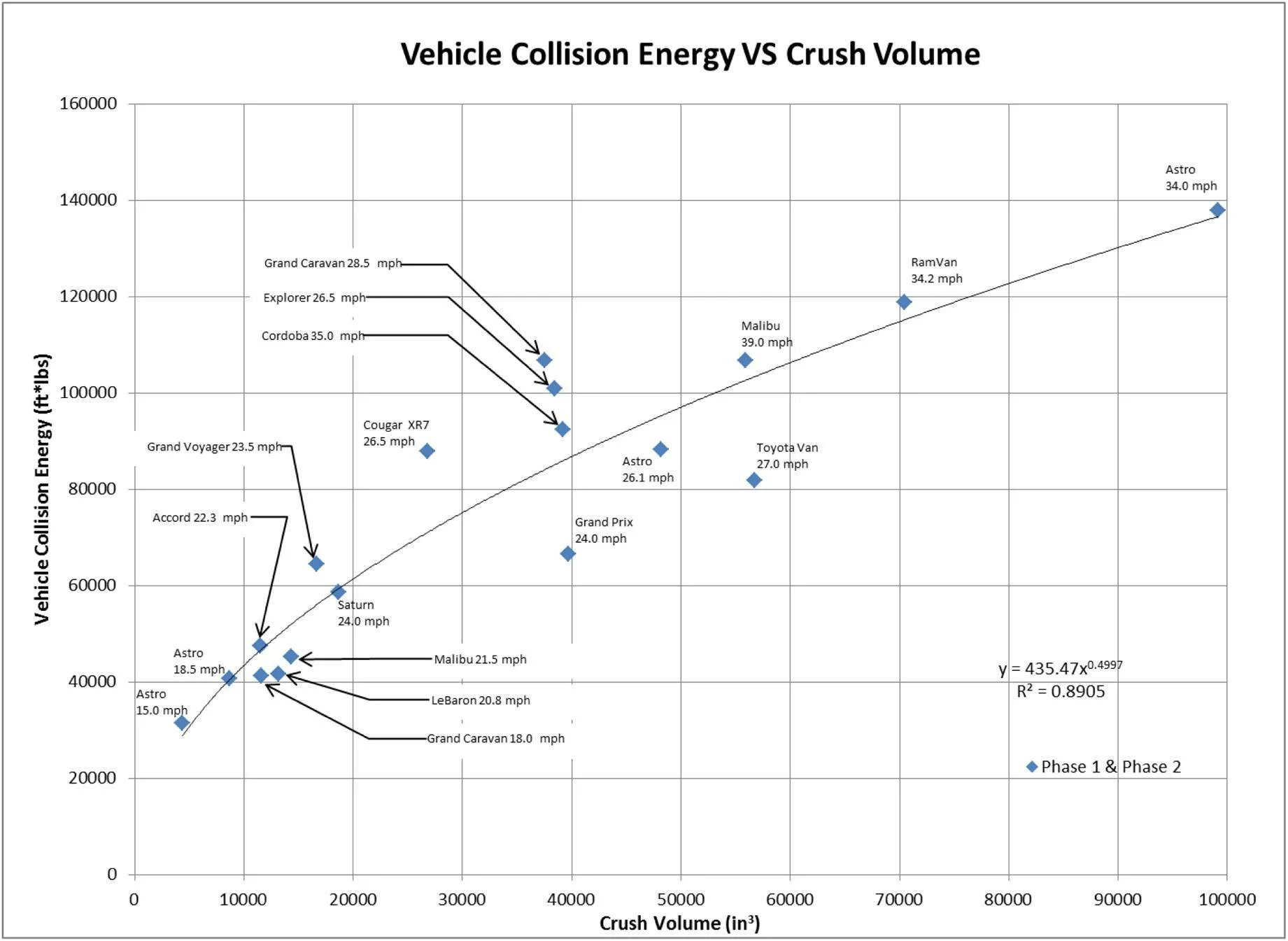
SAE 2012-01-0614 Figure 9, relating kinetic energy to volumetric crush.
They established a tidy power function relating the change in kinetic energy to crush volume, with an r-squared value of 0.89.

Where CV is the crush volume and energy is in ft-lbs. To finish things off, they analyzed 9 crash tests from other organizations and found the data aligned very well with the relationship they established.
If you find yourself analyzing a trailer underride, give this method a go. You'll need:
A 3D model of the damage (can be generated via photogrammetry, laser scanning, or even a total station)
A 3D model of an exemplar
A 3D CAD program (Blender, Rhino, AutoCAD, etc.)
Or... a helpful colleague with the above
Thanks for reading, keep learning!
Lou Peck
Lightpoint | JS Forensics